
By device
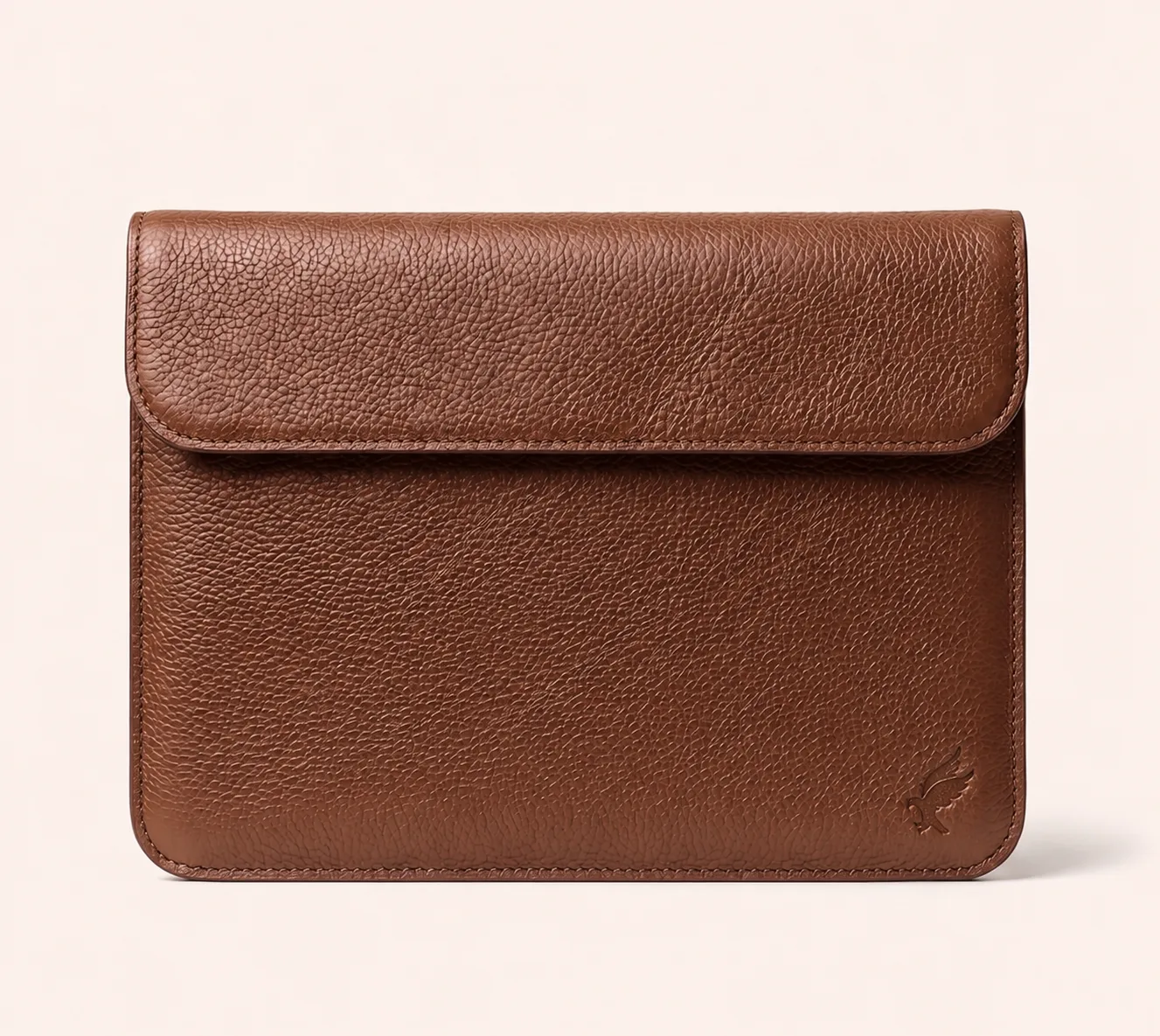
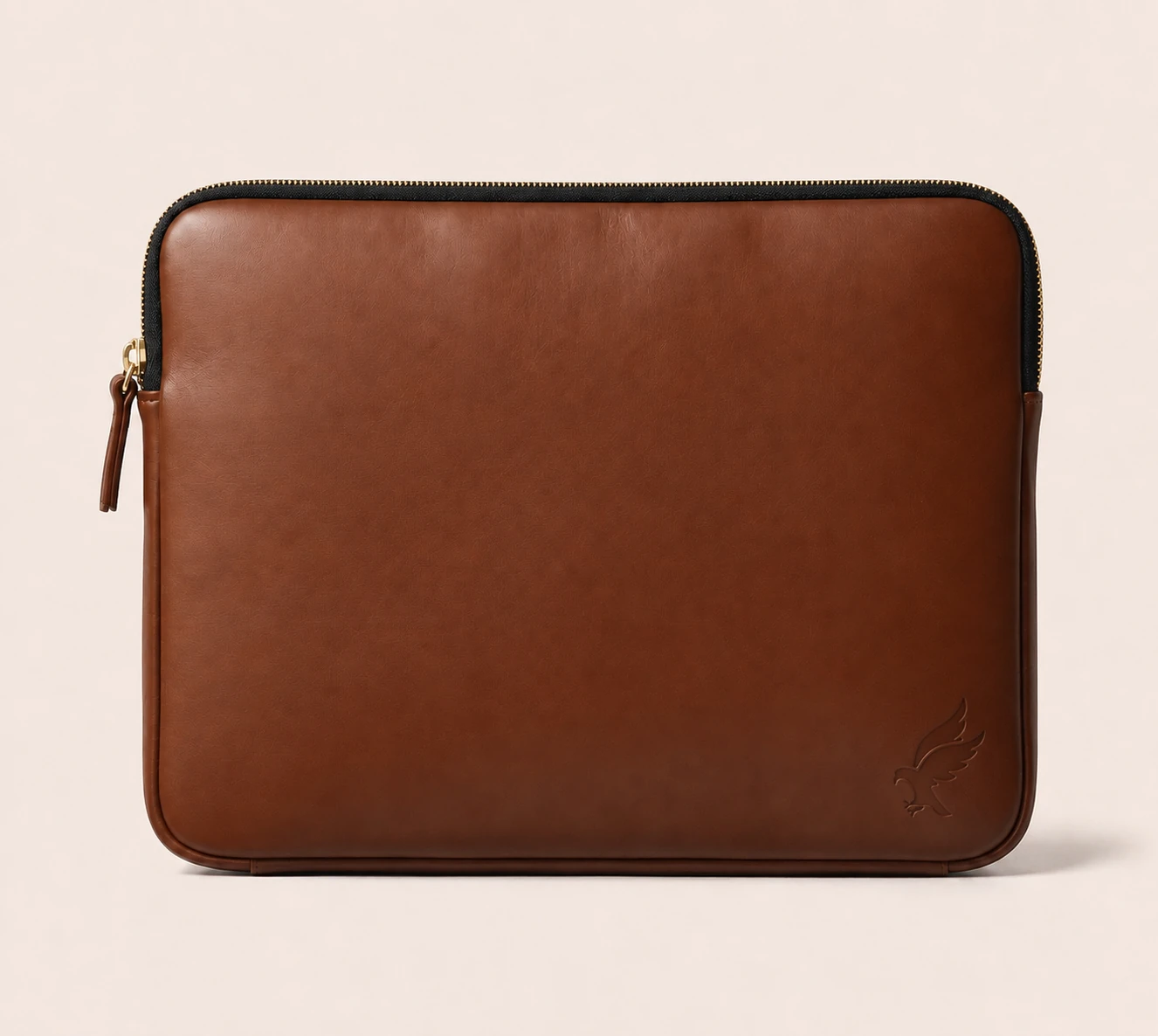
MacBook Leather Sleeve — Air and Pro
Full-grain leather sleeves sized for the MacBook Air and MacBook Pro, handmade in Lahore and delivered across Pakistan.
Which size for which MacBook
- MacBook Air 13
- 14-inch sleeve — 14.5 × 10 in
- MacBook Pro 14
- 14-inch sleeve — 14.5 × 10 in
- MacBook Air 15
- 16-inch sleeve — 16 × 11.5 in
- MacBook Pro 16
- 16-inch sleeve — 16 × 11.5 in
The rule is simple: a 13-inch or 14-inch MacBook takes our 14-inch sleeve, and anything larger takes the 16-inch. If you are between the two, take the larger — the extra room costs nothing and a sleeve that will not close is useless.
Why leather for a MacBook
An aluminium unibody scratches against grit long before it dents. What a MacBook actually needs day to day is a lined barrier between the lid and everything else in the bag — keys, chargers, the zip of the bag itself. Our interiors are brushed soft for exactly that, chosen not to polish or mark the casing.
The second reason is time. A MacBook is kept for years, and a neoprene sleeve is not. Full-grain leather is the one material that is visibly better at the end of that period than at the start.
The pieces
What full-grain actually means
Most laptop sleeves sold online in Pakistan are labelled "genuine leather". It reads like a guarantee. It is closer to the opposite — genuine leather is made from the split layers left behind once the top grain has been shaved away, and it wears the way cardboard wears. It peels at the corners, goes shiny where your hands sit, and never develops a patina.
Full-grain is the hide with nothing removed. The grain is still intact, which makes it denser, more resistant to moisture, and able to darken and soften rather than break down. A full-grain sleeve looks better in its fifth year than in its first. That is the whole argument for buying one, and it is the only claim on this page that matters.
So when you are comparing leather laptop sleeves, there is really one question: which layer of the hide is this? If the answer is not plainly "full-grain" or "top-grain", assume it is bonded and price it accordingly.